

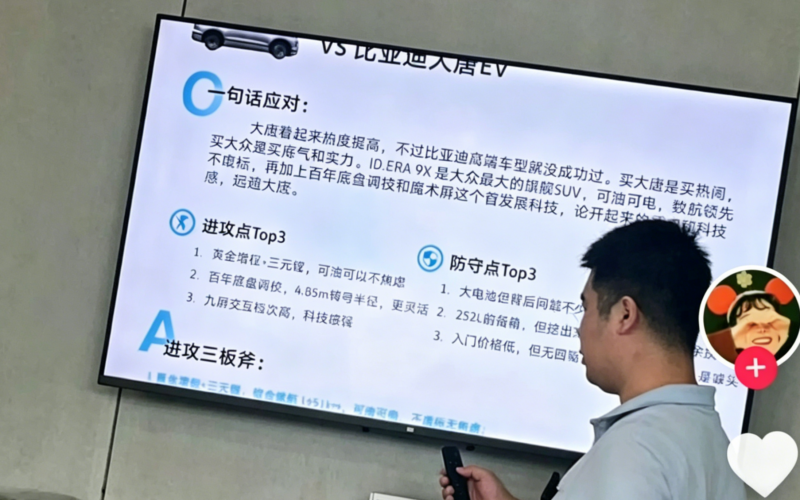
Digital video captures preserved on Weibo have exposed a regional dealer network's organized retail counterstrategy focused on BYD Da Tang (Great Tang) marketing assets. The leaked presentation slides, initially shared via a local retail outlet account before being removed from short-video platforms, detail specific tactical response parameters for consumer cross-shopping scenarios. These regional actions highlight growing retail friction in the premium crossover segment.
The documentation provides a standardized comparison matrix targeting the local new energy platform, outlining three attack vectors and three defensive positioning points for showroom staff. Sales personnel use these metrics to counter the market expansion of local battery systems. The dealer slide promotes a range extender powertrain with ternary lithium cells as an alternative, claiming a comprehensive operational range of 1,651 kilometers and a 4.85-meter turning radius. Staff are instructed to frame corporate manufacturing experience as a key indicator of stability.
The BYD Da Tang uses a 130 kWh second-generation Blade battery pack from the FinDreams Battery subsidiary. Over 70% of early buyers chose the maximum capacity option during the initial rollout. Standard specifications in the brand database outline this platform. Achieving the target of 20,000 units per month requires 2 GWh of battery cells, making manufacturing capacity the primary bottleneck rather than retail demand. A Toutiao retail capacity report confirms the component supplier is expanding production shifts to address delays.
The 950 km variant and Shengshi configurations are the most popular among early buyers. Order adjustments show that customers initially targeting the 850 km configuration often upgrade to the highest tier. Real-world testing indicates the premium vehicle maintains a continuous high-speed highway range of 600 kilometers.

Industry analysis from Chefans automotive retail platforms notes that regional scripts target configurations like the flagship architecture. Regional retail networks face a delivery backlog exceeding six months. This competitive tension mirrors a previous dispute where Li Auto accused Nissan of a smear campaign. Future product strategies will use the crossover baseline to anchor prices for upcoming premium platforms, such as the Da Han, expected to enter the market above 200,000 yuan ($29,544). Corporate financial tracking shows the group-average vehicle selling price has surpassed 160,000 yuan ($23,635).
Initial tracking records 150,000 refundable intent orders since the vehicle debuted at a starting price of 240,310 yuan ($35,500). Data from an Autohome industrial platform thread indicates intent-to-lock conversion rates exceed 50%. This commercial velocity helps stabilize macro vehicle delivery standings in the domestic market. The leaked presentation materials appear to represent localized dealer training tactics rather than official manufacturer corporate policy.