
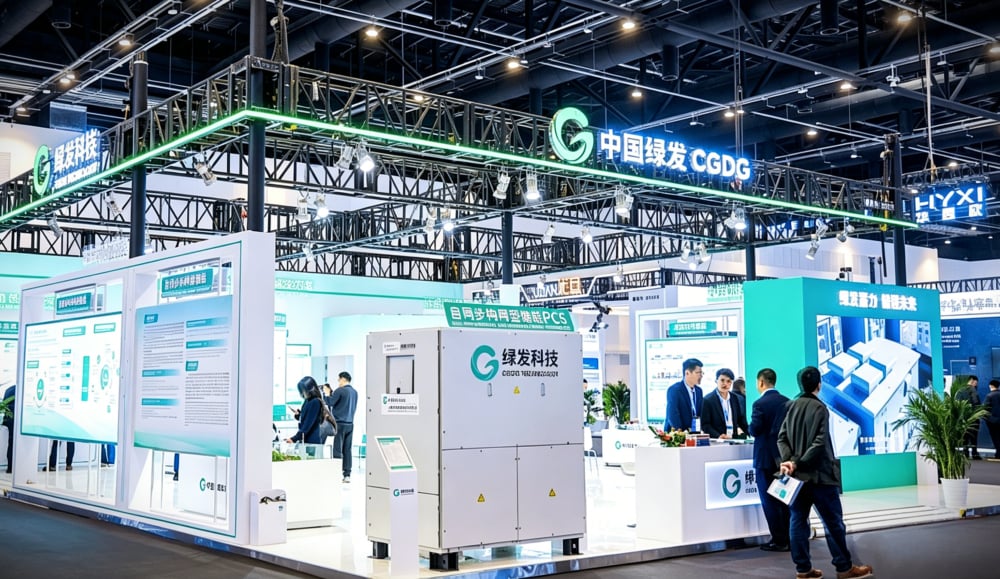
Nio’s battery supply partner, the Tianmu Lake Institute of Advanced Energy Storage Technologies (TIES), has revealed its latest liquid-solid-state battery cells in 314Ah and 588Ah capacities. The institute, co-founded by the key innovator behind the 150 kWh WeLion battery pack used in Nio EVs, showcased the new hardware alongside the state-backed China Green Development Group (CGDG).
The unveiling took place at the 2026 Tianmu Lake New Electrochemical Energy Storage Technology Seminar. The engineering approach relies on in-situ solidification, a process that chemically converts liquid electrolyte into a stable solid matrix inside the cell casing. This method aims to bridge the gap between conventional liquid lithium-ion cells and fully solid-state platforms.
Hardware Capacity Specs
The manufacturer introduced two large-format battery cells based on lithium-iron phosphate and carbon chemistry. The lineup includes a standard utility-grade 314Ah cell and a larger 588Ah variant, both optimized for long-duration energy systems requiring extended discharge windows. These configurations directly scale up the energy density metrics often tracked by domestic electric vehicle enthusiasts.
Regulatory Line Adaptations
The technology leverages manufacturing parameters with deep strategic implications for the automotive supply chain. Upcoming national standards, effective July 1, strictly define cells with 5% to 20% liquid content as liquid-solid-state architectures. This classification allows conventional liquid battery factories to adapt their production lines with less than 10% equipment modifications.
This structural adaptation effectively sidesteps the equipment investment expectations highlighted in recent reports on the solid-state equipment market. Instead of falling into an estimated 62.36 billion yuan (9.15 billion USD) machinery expenditure trap, the venture uses its active pilot line to manufacture these cells immediately.
Competitive Industry Bottlenecks
The rollout targets a commercial window while major tier-one automotive suppliers face persistent development bottlenecks. Internal evaluations indicate that market leader CATL keeps its pure solid-state battery development at a mid-level maturity rating. This delay allows more agile joint ventures to deploy high-capacity configurations directly into commercial networks.
TIES also finalized a strategic agreement with the Yellow River Delta Jinbo Chemical Research Institute to secure its raw energy material supply chain. The institute simultaneously launched a specialized evaluation solution to streamline quality control across materials and membranes. These integrated ecosystems directly support downstream output tracking as localized pilot lines scale up cell production.
Source: China Liyang Official WeChat Channels Live Stream