

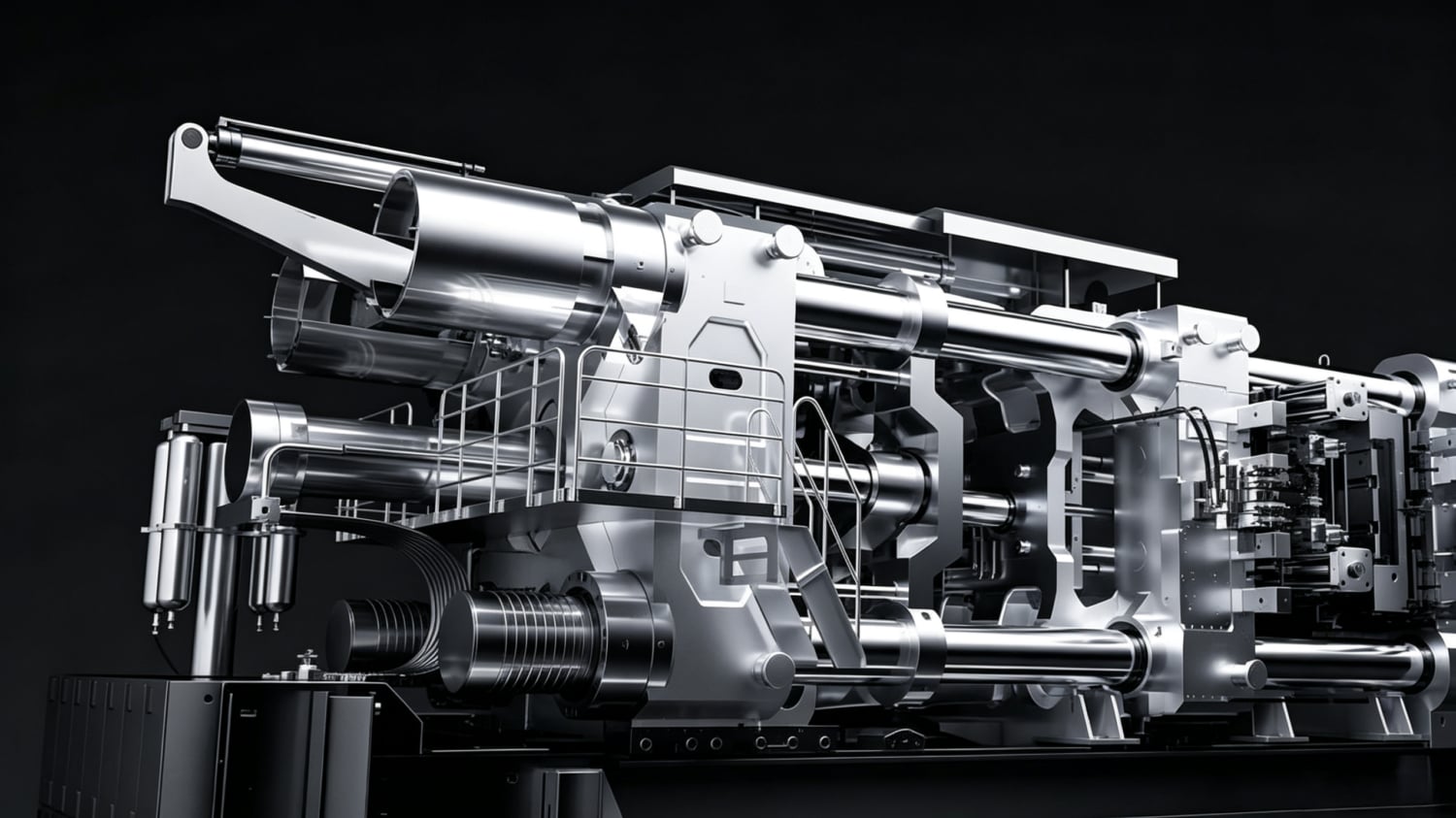
Xiaomi Auto has introduced its new Titan Alloy 2.0 manufacturing material, a proprietary formulation that uses 100% recycled aluminum for automotive structural parts. The company states this is the first domestic application of fully recycled alloys in mass-produced integrated die-cast rear floor assemblies, eliminating the need for virgin metal in critical safety zones.
Certified by the IVL Swedish Environmental Research Institute, the alloy registers a carbon emission value of just 1.1 kgCO₂e/kg, representing a 93% reduction compared to traditional primary aluminum production. The material is now officially listed in the international EPD system.
Metallurgy and testing
The production process follows a six-step sequence: raw material undergoes five-stage preprocessing, smelting, and composition fine-tuning. The resulting ingots are fed into automated gigacasting lines, with mechanical performance verified through internal X-ray diagnostics.
A technical committee organized by the China Machinery Industry Federation validated the casting's structural integrity. This innovation coincides with Xiaomi's broader portfolio expansion, including a previously leaked two-door electric sports car design. The material dynamically adjusts to structural safety parameters during vehicle operation.
Trade and regulation
By deploying low-carbon structural castings, per-vehicle carbon emissions drop by approximately 800 kg. This shift changes the environmental profile of cars entering global markets.
The European Union's upcoming Carbon Border Adjustment Mechanism will tax imported vehicles based on lifecycle carbon metrics. This compliance framework will affect future export models, such as the Xiaomi YU7 GT electric SUV.
Volume and projections
Xiaomi's internal forecasts target an annual production rate of 550,000 vehicles for the next-generation platform. Achieving this capacity would cut CO₂ emissions by about 450,000 tons annually across the assembly network. This aligns with the brand's scaling requirements as production expands.
According to China EV DataTracker data from May 2026, the Xiaomi SU7 achieved 24,023 sales—a 10.4% monthly decline and a 14.2% year-over-year decline—while holding a 73.3% brand share. The newly launched Xiaomi YU7 delivered 8,736 units, accounting for 26.7% of monthly volume.